
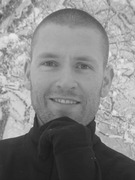
Prof. Yves Wiaux
Prof. Wiaux received the MSc degree in Physics and the PhD degree in Theoretical Physics from the Université catholique de Louvain (UCL, Louvain-la-Neuve) in Belgium, in 1999 and 2002, respectively.
He was a Senior Researcher at the Signal Processing Laboratories of the École Polytechnique Fédérale de Lausanne (EPFL) in Switzerland from 2003 to 2013, where he created the Biomedical and Astronomical Signal Processing (BASP) laboratory.
In 2013, he moved to Heriot-Watt University as an Associate Professor at the School of Engineering and Physical Sciences, where he currently runs the BASP group. He was promoted to Professor at Heriot-Watt in 2016. He is also an Academic Guest at EPFL and an Honorary Fellow at the University of Edinburgh (UoE).
Among other responsibilities, Prof. Wiaux chairs the BASP Frontiers Conference series. He is an Associate Editor of both the Royal Astronomical Society Techniques and Instruments (RASTI) journal and the IEEE Transactions on Computational Imaging.
Since 2010, he has led numerous research projects funded by both the Swiss National Science Foundation (SNF) and the UK Research and Innovation Councils (UKRI).
The ethos of Prof. Wiaux’s BASP laboratory is to develop cutting-edge research in computational imaging, from theory and algorithms to applications in astronomy and medicine.
He was a Senior Researcher at the Signal Processing Laboratories of the École Polytechnique Fédérale de Lausanne (EPFL) in Switzerland from 2003 to 2013, where he created the Biomedical and Astronomical Signal Processing (BASP) laboratory.
In 2013, he moved to Heriot-Watt University as an Associate Professor at the School of Engineering and Physical Sciences, where he currently runs the BASP group. He was promoted to Professor at Heriot-Watt in 2016. He is also an Academic Guest at EPFL and an Honorary Fellow at the University of Edinburgh (UoE).
Among other responsibilities, Prof. Wiaux chairs the BASP Frontiers Conference series. He is an Associate Editor of both the Royal Astronomical Society Techniques and Instruments (RASTI) journal and the IEEE Transactions on Computational Imaging.
Since 2010, he has led numerous research projects funded by both the Swiss National Science Foundation (SNF) and the UK Research and Innovation Councils (UKRI).
The ethos of Prof. Wiaux’s BASP laboratory is to develop cutting-edge research in computational imaging, from theory and algorithms to applications in astronomy and medicine.
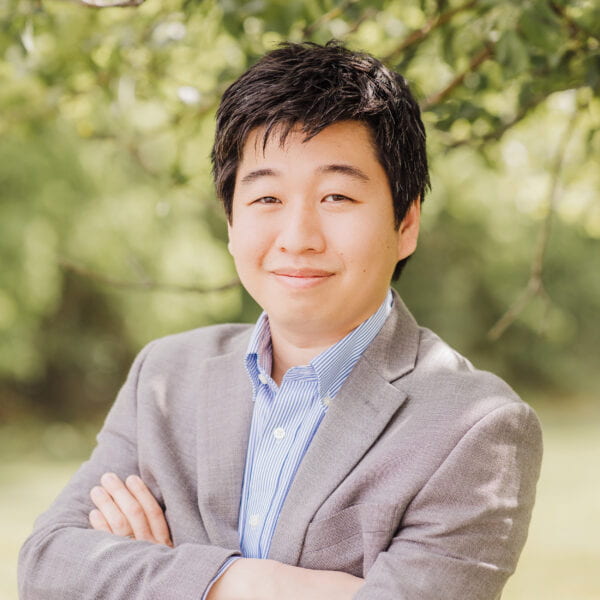
Prof. Kazu Akiyama
Prof. Akiyama received his BSc in Physics from Hokkaido University in 2010 and his MSc and PhD in Astronomy from the University of Tokyo in 2012 and 2015, respectively.
He spent most of his postdoctoral career at the Massachusetts Institute of Technology (MIT) Haystack Observatory, first as an Overseas Fellow of the Japan Society for the Promotion of Science (2015–2017) and a Jansky Fellow of the National Radio Astronomy Observatory (2017–2020), before being promoted to an MIT Research Scientist to serve as a principal investigator (2020–2026).
In March 2026, he joined the School of Engineering and Physical Sciences at Heriot-Watt University as an Associate Professor. Since October 2026, he has been a Professor and Royal Society Faraday Discovery Fellow. He also serves as a Smithsonian Research Associate at the Center for Astrophysics | Harvard & Smithsonian, a Research Affiliate at MIT, and a Special Visiting Researcher at the National Astronomical Observatory of Japan.
His research lies at the intersection of astronomy, fundamental physics, and computational methods, with a particular focus on black holes at the highest angular resolutions. His leadership roles include Deputy Project Scientist of the international EHT Collaboration, co-lead of the Algorithm & Inference Working Group of the next-generation EHT, and leadership positions within the Black Hole Explorer space VLBI mission concept.
His honours include the Young Astronomer Award of the Astronomical Society of Japan (2020), the Young Scientists’ Prize from Japan’s Ministry of Education, Culture, Sports, Science and Technology (2020), selection for Encyclopædia Britannica’s 20 Under 40: Young Shapers of the Future (2021), and the Breakthrough Prize in Fundamental Physics (2020) as a co-recipient.
He spent most of his postdoctoral career at the Massachusetts Institute of Technology (MIT) Haystack Observatory, first as an Overseas Fellow of the Japan Society for the Promotion of Science (2015–2017) and a Jansky Fellow of the National Radio Astronomy Observatory (2017–2020), before being promoted to an MIT Research Scientist to serve as a principal investigator (2020–2026).
In March 2026, he joined the School of Engineering and Physical Sciences at Heriot-Watt University as an Associate Professor. Since October 2026, he has been a Professor and Royal Society Faraday Discovery Fellow. He also serves as a Smithsonian Research Associate at the Center for Astrophysics | Harvard & Smithsonian, a Research Affiliate at MIT, and a Special Visiting Researcher at the National Astronomical Observatory of Japan.
His research lies at the intersection of astronomy, fundamental physics, and computational methods, with a particular focus on black holes at the highest angular resolutions. His leadership roles include Deputy Project Scientist of the international EHT Collaboration, co-lead of the Algorithm & Inference Working Group of the next-generation EHT, and leadership positions within the Black Hole Explorer space VLBI mission concept.
His honours include the Young Astronomer Award of the Astronomical Society of Japan (2020), the Young Scientists’ Prize from Japan’s Ministry of Education, Culture, Sports, Science and Technology (2020), selection for Encyclopædia Britannica’s 20 Under 40: Young Shapers of the Future (2021), and the Breakthrough Prize in Fundamental Physics (2020) as a co-recipient.
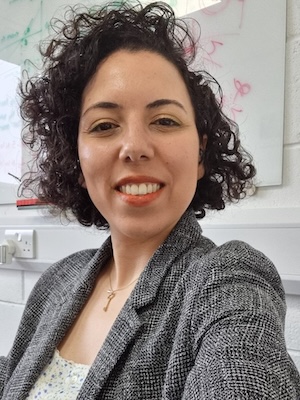
Assist. Prof. Arwa Dabbech
Dr Arwa Dabbech is an Assistant Professor in Computational Imaging at the Institute of Sensors Signals and Systems (ISSS), Heriot-Watt University (UK), and a member of the Biomedical and Astronomical Signal Processing (BASP) Laboratory. She first joined HWU in 2015 as a Research Associate in BASP before being appointed Assistant Professor in 2023.
She holds a Diplôme National d’Ingénieur in Signals and Systems from the École Polytechnique de Tunisie (Tunisia; equivalent to a Master’s in Engineering) and a PhD in Imaging Techniques for Astronomy from the Observatoire de la Côte d’Azur (France). Her research lies at the intersection of optimisation theory, deep learning, and large-scale imaging, with a focus on developing advanced imaging algorithms for radio astronomy.
She holds a Diplôme National d’Ingénieur in Signals and Systems from the École Polytechnique de Tunisie (Tunisia; equivalent to a Master’s in Engineering) and a PhD in Imaging Techniques for Astronomy from the Observatoire de la Côte d’Azur (France). Her research lies at the intersection of optimisation theory, deep learning, and large-scale imaging, with a focus on developing advanced imaging algorithms for radio astronomy.